Source-checked research explainer
Did plastic in Maldivian air come from the sea beside it?
조회수 확인 중 · Loading views
Country / region: Maldives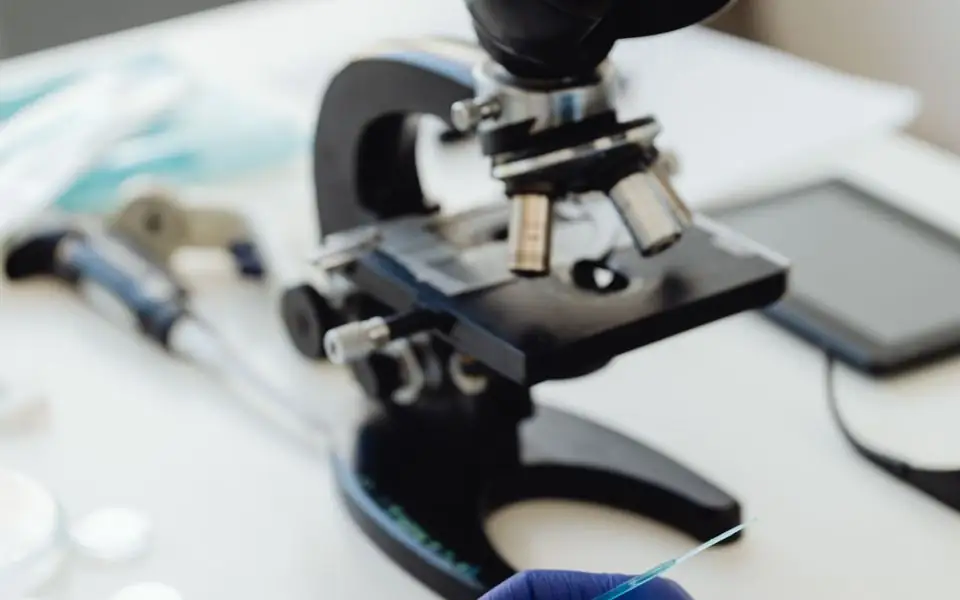
Researchers compared the shapes and materials of particles in air and seawater, using black carbon as a contextual clue. Differences between the environments were identified, but exact plastic sources, travel distances and health risks were not established.
If crumbs on a table differ from dust on the floor, can we immediately tell where each came from? Plastic fragments found in Maldivian air and seawater pose a similar question. A peer-reviewed paper published in Atmospheric Chemistry and Physics on November 17 compared particle shapes and materials with surrounding air conditions. A simple explanation that sea plastic rose directly into the air was insufficient. But the research did not establish which country or factory the particles came from either. Crumbs illustrate pathway tracing; plastic transport requires considering winds, water and particle properties together.
Microplastics, MP, usually mean plastic particles smaller than five millimetres. Polymers forming plastics are materials made of long chains of small molecular units. This study abbreviates airborne particles as AMP and marine particles as MMP. However, it used an operational definition retaining long, thin fibres up to 15 millimetres long when their length-to-width ratio exceeded three. An operational definition specifies what a particular measurement counts. Restricting every particle to the conventional five-millimetre criterion changed the seawater mean from 876 to 856 particles per cubic metre. Size criteria therefore affect the numbers.
Measurements took place at the Hanimaadhoo climate observatory in the northern Indian Ocean's Maldives and nearby coasts. Observations ran from January 13 to February 4, 2023, distinct from publication of the new paper in 2026. This single dry-season campaign represents neither today's Maldives nor all seasons. Of 48 air samples, 46 were environmental samples and two laboratory blanks. Blanks are comparison samples examining contamination from preparation and analysis rather than actual environmental particles. There were 15 seawater samples; exposure periods of some air samples overlapped, so the 46 cannot be treated as completely independent time windows.
Air was drawn through a deposition box at 1.5 cubic metres per hour to collect particles settling onto glass slides. Deposition means suspended particles attaching to a surface. Because the apparatus combined airflow and deposition collection, it also differed from a purely passive dust dish. Researchers estimated concentration by dividing particle counts by air volume calculated from flow rate and exposure duration. Flow rate is volume moving in a given time. Collection probability differs with particle size and shape, so this is not a complete measurement of every particle people might inhale. Seawater was filtered through a 32-micrometre sieve. A micrometre is one millionth of a metre; small sieve openings do not guarantee complete capture of all small particles.
A visible particle is not automatically plastic. Researchers examined shapes microscopically and analysed selected particles with micro-Raman spectroscopy. A microscope magnifies small objects. Raman spectroscopy reads patterns in scattered laser light whose energy changes slightly after interacting with material. Patterns depend on molecular bonds and vibrations, providing clues to material identity. This resembles a fingerprint, but not every sample provides a clear one. A laser produces well-ordered light; a spectrum separates light signals according to their properties.
This was not an exhaustive inspection individually confirming every particle by Raman analysis. Expert interpretation of direct spectra was complemented, under specified conditions, by classifications of morphologically similar particles. Weathered material or fluorescence can obscure the desired signal. Fluorescence is light emitted again after light absorption. Pigments supply colour, and their signals can exceed those of the underlying plastic. Some particles were classified as plastic while their polymer type remained unclassified. Contamination in air, transport and laboratories, and instrument-selection effects, also require consideration. The smallest observed particle must not be read as a validated boundary of complete detection.
The reported airborne mean was 3.06 particles per cubic metre of air, with a standard deviation of 2.75. Seawater averaged 876 particles per cubic metre of water, with a standard deviation of 804. A cubic metre is a volume one metre wide, long and high. Standard deviation describes how sample values spread around their mean; it does not mean the instrument was wrong by that amount. Air volume and water volume refer to different environments, so dividing the numbers cannot establish a sea-to-air transfer ratio or a multiple of human health risk. Large differences from other studies likewise cannot immediately be interpreted as pollution increasing over time when sampling depths, sieves or analytical methods differ.
Material composition and size distributions differed between air and water. Common polymers including polyethylene, PE, and polypropylene, PP, stood out in air, whereas paint- and coating-related fragments and polyethylene terephthalate, PET, mattered in seawater. PE and PP have many uses, including packaging, household products and ropes; PET is also used in fibres and bottles. A material name therefore does not establish emissions from a particular packaging company or fishing activity. Density is mass per volume; buoyancy is the upward force water exerts on an object. Density, buoyancy, shape and surface changes can affect which particles remain in air or water, so distribution differences do not prove that emissions sources alone differ.
Additional pathway clues came from equivalent black carbon, eBC, and aerosol light scattering. Aerosols are small solid or liquid particles suspended in air. Black carbon is a light-absorbing particle component related to incomplete combustion; eBC is an amount inferred from instrumental light-absorption measurements and assumptions. It is neither a plastic-specific marker nor a tag proving exactly the same source. Light scattering changes light's direction through interaction with particles; natural particles such as salt and dust also contribute. Researchers used these measurements as context for air conditions at the time. They did not quantitatively separate black carbon from fossil-fuel and vegetation burning.
Wind-sector tests place an important restraint on interpretation. Comparing five nonoverlapping short sampling windows each from northerly and easterly sectors found no statistically significant AMP concentration difference, p=0.81. A p-value evaluates observed data relative to chance variation under statistical assumptions; it is neither the probability that a hypothesis is true nor a plastic fraction. Nonsignificance also does not prove that no difference exists. Even if other airborne particles' chemistry and eBC suggest transported polluted air, that cannot be converted into proof of the plastics' own travel distances or shared sources. The paper concludes that the contributions of regional, long-range and nearby sources remain unresolved.
The prospect is monitoring that combines morphology, materials, weather and optical observations rather than testing air and water separately. This research direction and editorial conditional interpretation do not mean a new cleanup device was invented. More independent sampling periods, seasons and sites, high-flow active collection, standardized contamination controls and particle-by-particle material verification are needed. Active collection draws air through a specified flow to gather particles. Alongside cost, comparisons should examine analysis speed, recovery, detection limits, instrument calibration and interlaboratory reproducibility. Recovery is the fraction of targets originally present that are ultimately retrieved and measured. The study established neither air–sea exchange quantities, all nanoplastics, human disease risks nor cleanup efficiency.
The research was conducted by 13 authors including Piotr Markuszewski with institutions including the Polish Academy of Sciences' Institute of Oceanology, Stockholm University, the University of Milano-Bicocca and Maldivian meteorological observation organizations. Support is acknowledged from Polish research and academic-exchange bodies, the Swedish Research Council, the Bolin Centre and others. The corresponding author declares no competing interests for any author; this is not an independent editorial audit. Data locations are identified, but the editorial team did not download and reanalyse them. CC BY 4.0 permits reuse and translation subject to conditions including attribution. The authors also disclose AI assistance with code and writing and their final responsibility. This open licence grants neither patents nor exclusive rights. No company's foundational patent, manufacturer of a new emissions-monitoring product, or paid customer contract was verified.
Company connections must first distinguish actual tool-supply roles. The methods report using a Leica M205C microscope and DFC450 camera. Raman analysis used a Horiba Jobin Yvon LabRam Aramis, a separate supplier role from Leica microscopy. Leica Microsystems' official introduction identifies it as part of Danaher; it must also be distinguished from a similarly named camera company. Danaher's October 21 results release identifies New York Stock Exchange, NYSE, symbol DHR. A stock symbol identifies a listed share. Using a microscope establishes neither patent ownership of the research principle, a microplastic-cleanup business, a new contract nor increased instrument revenue.
Danaher reported continuing-operations revenue of US$6.554 billion, GAAP operating profit of US$1.245 billion and operating cash inflow of US$1.886 billion for the three months ended September 25, 2026. Continuing operations is an accounting scope distinguished from disposed or discontinued businesses. Revenue is sales income; operating profit deducts core-business costs; cash flow records actual money entering and leaving. These are whole-company figures, not results for the relevant Leica products or this paper. Current share price, company valuation and research-related revenue share were not verified. An optimistic research scenario is standardization and independent validation followed by formal rights and paid monitoring demand; the baseline is academic investigation using existing equipment; a pessimistic scenario is contamination, selection bias and costs preventing reliable comparison. These are not Danaher business plans or profit forecasts. Each connection from technical usefulness to adoption, revenue, profit and share value needs evidence. Dilution through new shares reducing existing ownership proportions is a general financing risk, not a verified company plan. Next checks are independent observations spanning more seasons, standardized analysis, official rights and contracts, and product-specific profitability.
Our reading
Air beside the sea does not establish that its pollution particles came from the sea. Equally, clues that background air travelled far cannot become proof of plastics' own long journeys. The practical value lies in exposing limitations of different measurements and improving comparative-observation design. The same distinctions are needed when connecting instrument supply and company finances to research rights or new revenue.
Research and sources
Research published: 2026-11-17 · Atmospheric Chemistry and Physics26,16341–16372 · DOI: 10.5194/acp-26-16341-2026
Piotr Markuszewski and 12 coauthors, “Airborne and marine microplastics in the Northern Indian Ocean: decoupled pathways traced by black carbon”, Atmospheric Chemistry and Physics 26, 16341–16372, November 17, 2026, DOI 10.5194/acp-26-16341-2026. Final peer-reviewed paper. Original: https://acp.copernicus.org/articles/26/16341/2026/ . CC BY 4.0: https://creativecommons.org/licenses/by/4.0/ . Independently explained and translated with attribution. Observations: January 13–February 4, 2023. Company context: official Leica Microsystems materials and Danaher's October 21, 2026 results checked November 19, 2026; not verification of research/product-specific revenue or current share prices.
 Science
 Science
 Science